
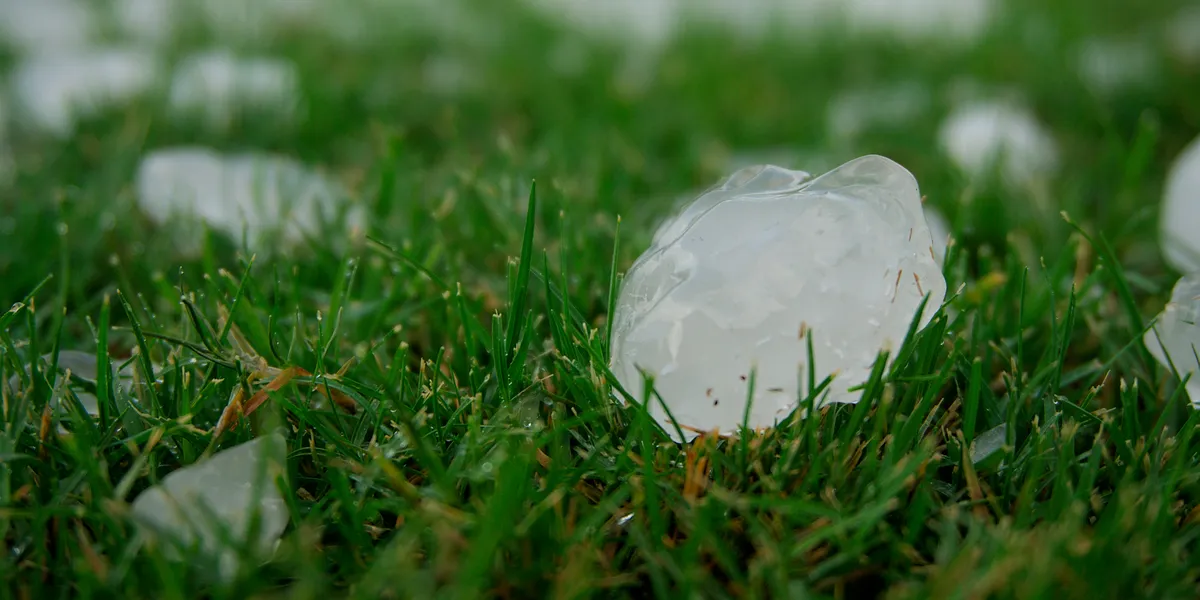
Storm season has arrived on the Sunshine Coast. The Bureau of Meteorology says the warmer months, September to March, are the peak season for severe thunderstorms, and in Queensland most severe storms happen between late September and April. Hail is one of the main ways those storms damage cars.
This guide covers how to protect your car before a storm, and what to do if it gets hit. It draws on official advice from the Bureau, the Queensland Government and Sunshine Coast Council, plus what we see when hail-damaged cars come into our Bells Creek workshop.
When does a storm count as "severe"?
The Bureau issues a Severe Thunderstorm Warning when it expects one or more of the following:
- hail 2cm across or larger (about the size of a $2 coin)
- wind gusts of 90km/h or more
- heavy rain that could cause flash flooding
- tornadoes
When hail 5cm or larger is expected, the warning says "giant hail". Hail at the smaller end of that range can still leave dozens of small dents across a roof, bonnet and boot lid.
Hail on the Sunshine Coast is not rare
Two recent examples:
- November 2019: hailstorms across South East Queensland, including the Sunshine Coast, were declared a catastrophe by the Insurance Council of Australia. Within days, insurers had received more than 5,000 claims, about 3,000 of them for motor vehicles.
- 24 November 2025: the Bureau issued a Severe Thunderstorm Warning for the Coast. Residents reported hail at Buderim, a 100km/h wind gust was recorded at Maroochydore, and more than 22,000 Energex customers in the Sunshine Coast Council area lost power.
Before a storm: how to protect your car
Know when a storm is coming
- Check the Bureau of Meteorology's warnings, either on its website or in the BOM Weather app.
- Sunshine Coast Council's Disaster Hub brings together local weather warnings, road closures and traffic cameras in one place.
- If you're insured with Budget Direct, its free Hail Hero SMS service texts you when hail is heading towards your home address. Budget Direct says it aims to give you 10 minutes or more to get the car under cover.
Get it under cover
The Queensland Government's Get Ready advice is to park under cover when severe weather warnings are issued, away from trees, power lines and waterways. A garage, carport or undercover car park all work.
No cover? Use blankets or a hail cover
If there's nowhere undercover to park, Get Ready recommends firmly securing blankets, quilts or a purpose-made hail cover over the car. It also suggests keeping a tarpaulin in the car to keep rain out if a window or windscreen breaks.
Check your insurance now, not after the storm
Make sure your policy is current and that you know what it covers for storm and hail damage. The time to find out is before the season, not when you're standing next to a dented car.
Safety first: a car can be repaired. Don't go outside to move or cover your car once a storm has started, and if a road is flooded, don't drive through it. As the Queensland Government puts it, "If it's flooded, forget it."
After the storm: what to do if your car's been hit
- Check it's safe to drive. Look for cracked glass, broken lights and damaged mirrors. If your view through the windscreen is affected, don't drive the car.
- Photograph the damage. Take wide shots of each side and close-ups of the roof, bonnet and boot. Hail dents are hard to see in flat light, so photos taken at an angle to the panel, where reflections run across it, show them best.
- Lodge your claim early. After the 2019 storms, the Insurance Council urged people to lodge claims with their insurer as soon as possible. Once you have a claim number, we can get started. Our guide to the hail insurance claim process walks through each step.
- Get a proper assessment. Hail dents are easy to miss in ordinary light. At our workshop we assess every panel under reflective lighting and count each dent, so your insurer gets an accurate picture of the damage.
Can hail damage be fixed without repainting?
Often, yes. Where the paint is not cracked or chipped, hail dents are usually well suited to paintless dent repair: each dent is worked out from behind the panel, and the original factory paint stays intact. If the paint is broken or the metal is badly stretched, some panel and paint work may be needed instead. Our PDR vs panel beating guide explains the difference.
For more on how we repair hail-damaged cars, see our hail damage repair page. For anything else, from car-park dings to trolley knocks, see our dent repair on the Sunshine Coast services.
Storm-season checklist
- Know where you'll park undercover at home, at work and when you're out
- Keep thick blankets or a hail cover, plus a tarp, in the car or garage
- Have a way to receive warnings: the BOM Weather app, Council's Disaster Hub, or your insurer's alerts
- Check your car insurance is current and covers storm damage
- After a storm: check it's safe, photograph the damage, lodge your claim and book an assessment
Sources
- Bureau of Meteorology: Severe thunderstorms, your questions answered
- Redcliffe Peninsula News: Hail explained, quoting the Bureau of Meteorology
- Queensland Government Get Ready: Protection while you are out and about (PDF)
- Sunshine Coast Council: Disaster Hub
- Budget Direct: Hail Hero SMS
- Insurance Business: ICA declares hailstorm a catastrophe (November 2019)
- Sunshine Coast News: Warning issued as storms batter Coast (24 November 2025)
Written by the team at Sunshine Dent Co., Bells Creek. Published 19 October 2026.


